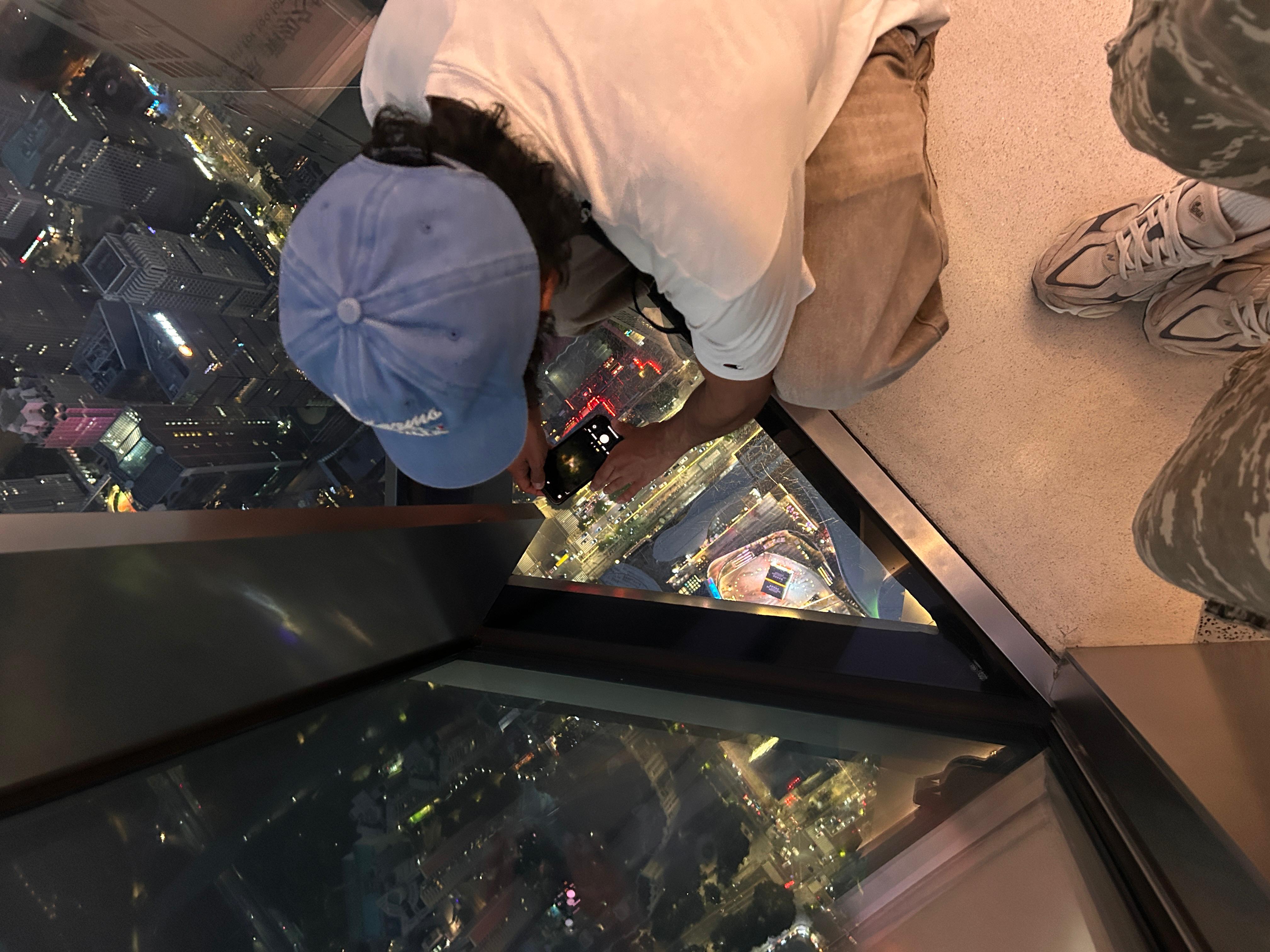
Hi!
I'm Marlon
- ux / ui
- video editing
- 3d
- graphic design
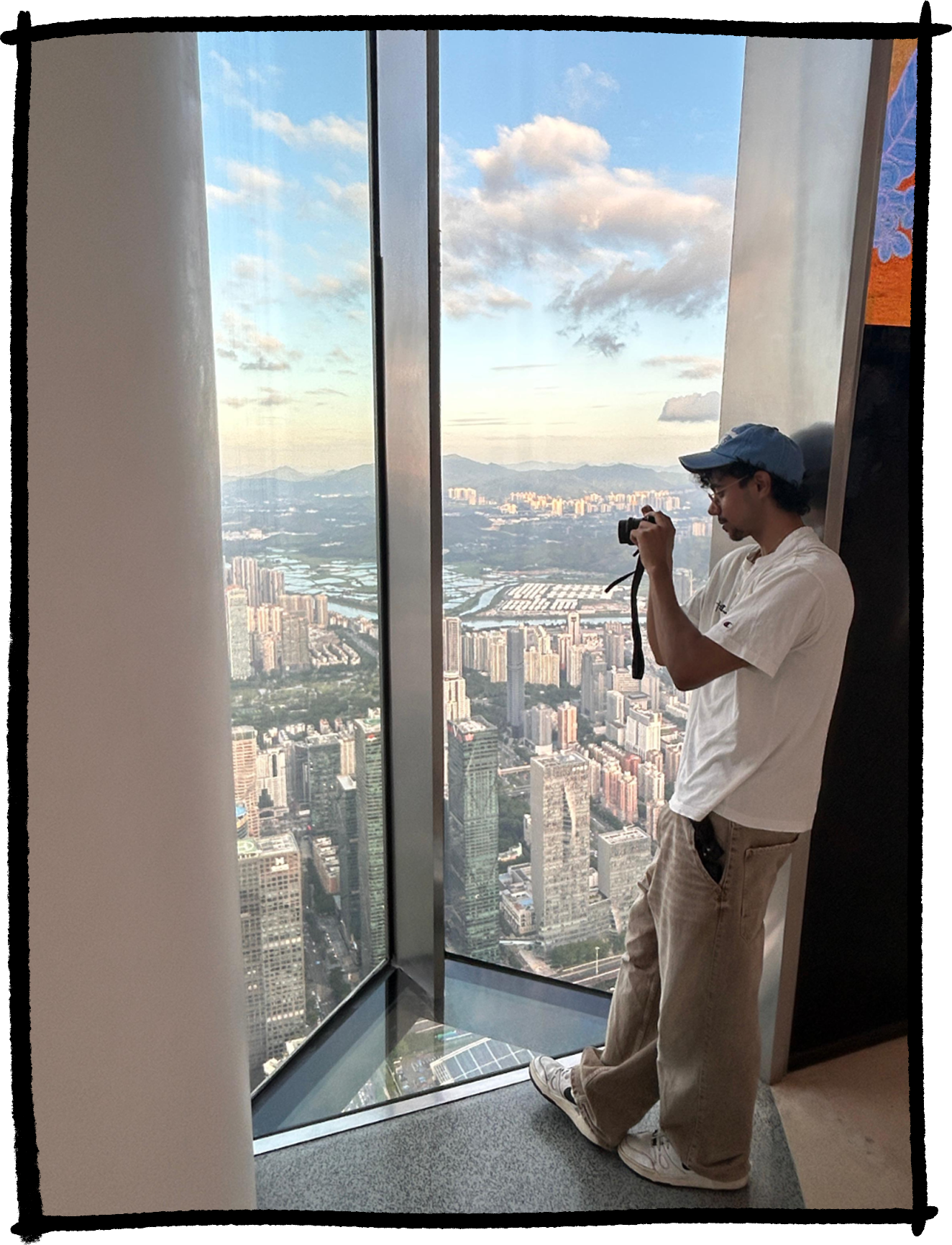
Hi!
I'm Marlon
memories is a short 3D film about nostalgia — not the cozy, harmless kind, but the type that makes you idealize the past a little too much. I wanted to explore why looking back can feel so good even when it kind of messes with your head. Everything from concept to color grade was done by me, solo.
The tricky part was showing a feeling without just slapping text on screen. I went with environments that look warm and familiar at first — but the longer you look, the more something feels slightly off. Scale, light, depth — all subtly wrong. Uncomfortable under the surface.
I exported separate render passes (diffuse, shadow, depth, emission) as EXR files so I could composite non-destructively in AE. That way I could tweak the atmosphere, glow and depth of field without touching the 3D scenes again.
I recorded the narration myself, then used AI to transform it into a female voice. It wasn't a shortcut — it was a decision. Nostalgia is always someone else's reconstruction of a memory. Having a different voice tell the story felt right.
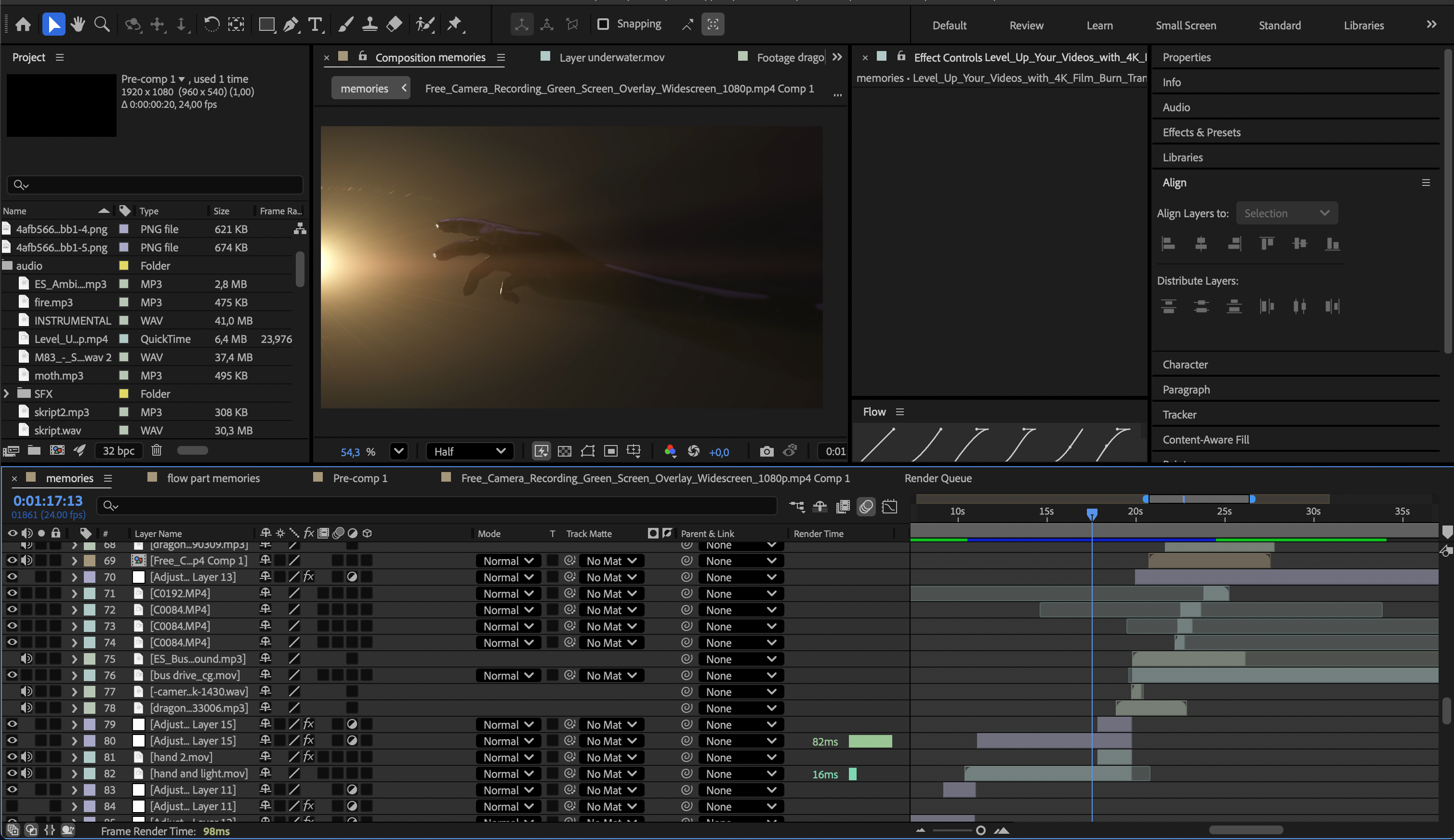
After Effects timeline — 80+ layers across audio, VFX, color and camera overlays.
Less is more — genuinely. Early cuts of this film explained everything. Once I stopped over-explaining and trusted the visuals to carry the meaning, it actually became what I wanted it to be. Also: having a solid render pipeline matters more than you think when you're working solo and don't want to re-render 8-hour scenes.
Zap is a dating app that uses clothing style as an icebreaker. Instead of swiping on faces, you swipe on outfits — and match with people who share your aesthetic. Shopping integration makes the whole thing circular: you can switch modes between dating and shopping to buy the pieces you see directly in the app, keeping sustainability in the loop. Another thought behind this is that what you buy changes your dating algorithm, showing you people with similar style preferences.
Style is identity. If you can see what someone wears, you
already know more about them than any "what's your vibe?" prompt
could ever tell you.
Note: Prototypes shown here do not have blurred faces. The
actual Figma file does, which are only revealed after a match is
made.
Prototype walkthrough — iPhone mockup, recorded in Jitter
Clothes communicate identity before you even open your mouth. Matching someone based on aesthetic gives you an immediate, genuine conversation starter — something way more useful than "hey, how's it going?" And combining dating with second-hand shopping wasn't just a gimmick: it ties into how people actually discover fashion online.
We looked at Tinder, Vinted and Bumble to figure out what actually annoys people. One thing came up a lot in interviews: pressure. Classic dating apps put you on the spot immediately. Liking someone's face is high-stakes. Liking their jacket? Much lower barrier to entry.
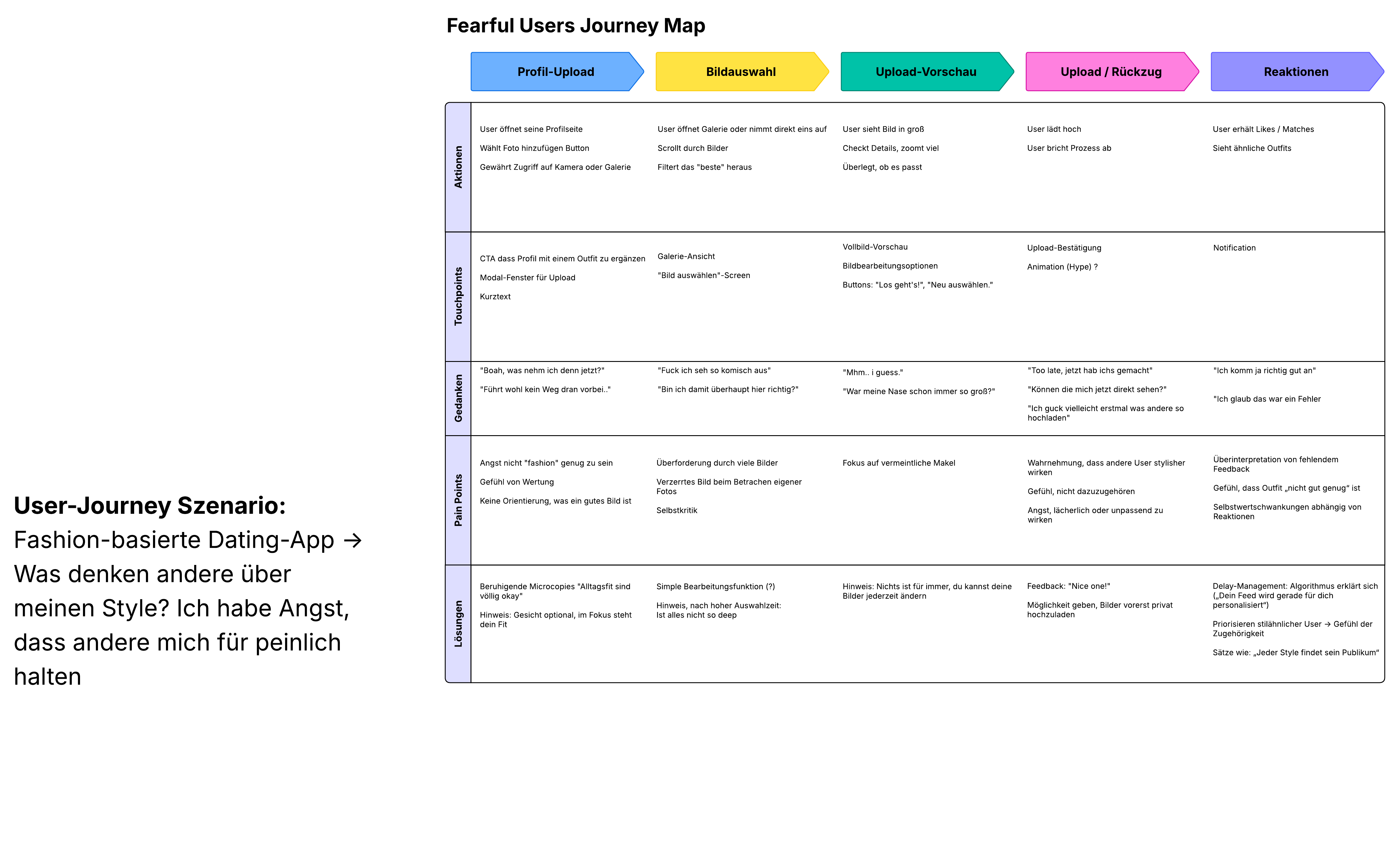
Strategy: lower the stakes. Engaging with an outfit feels less "exposed" than engaging with a person directly.
Two main levers: reduce social friction (style-first matching via algorithm, no face-first pressure) and reward circular behavior (shopping second-hand earns you visibility boosts in the feed). The goal was an app that feels playful, not performative.
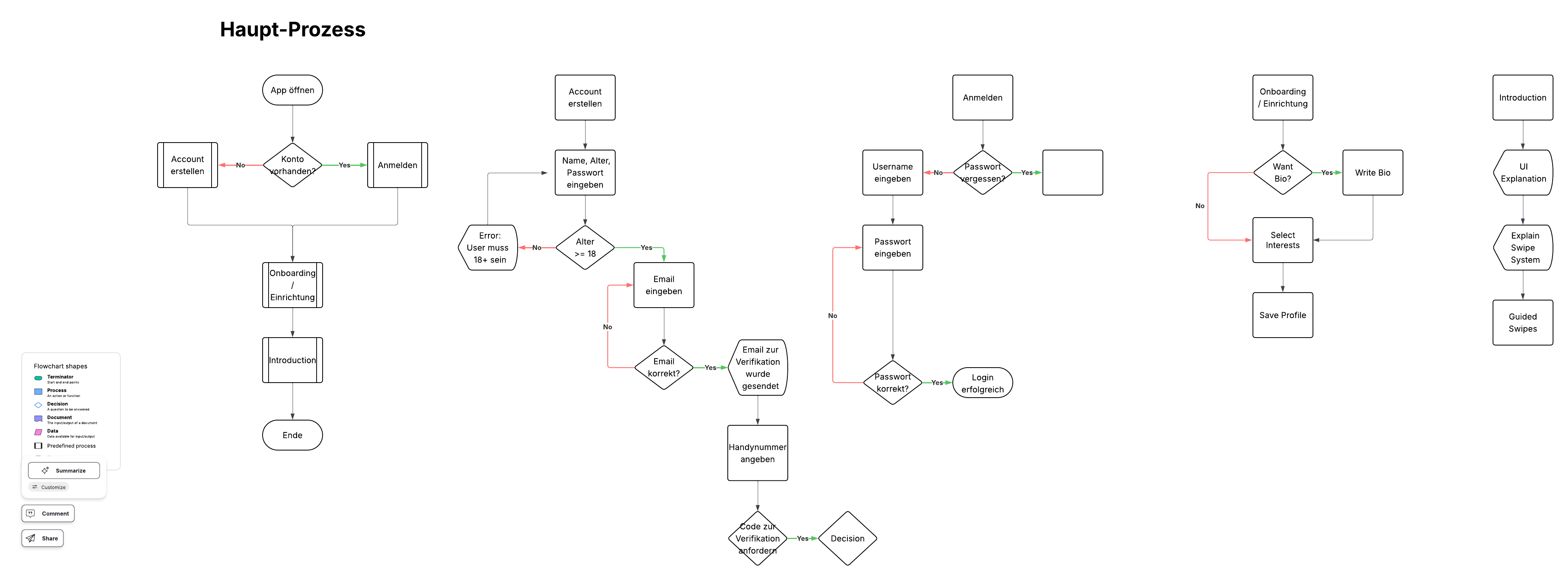
Onboarding flow mapped in Lucidchart
Three core screens, each solving a specific problem:
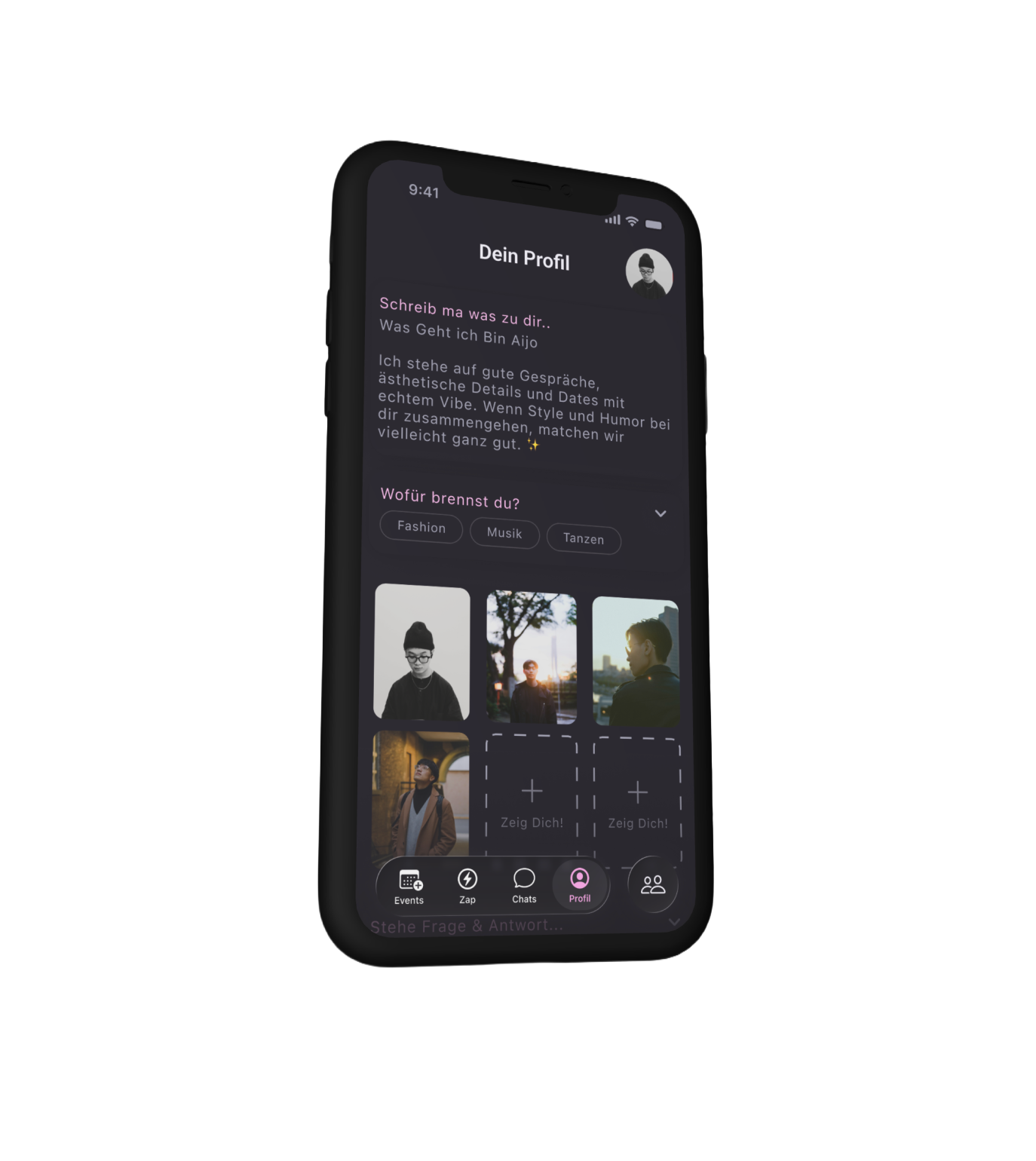
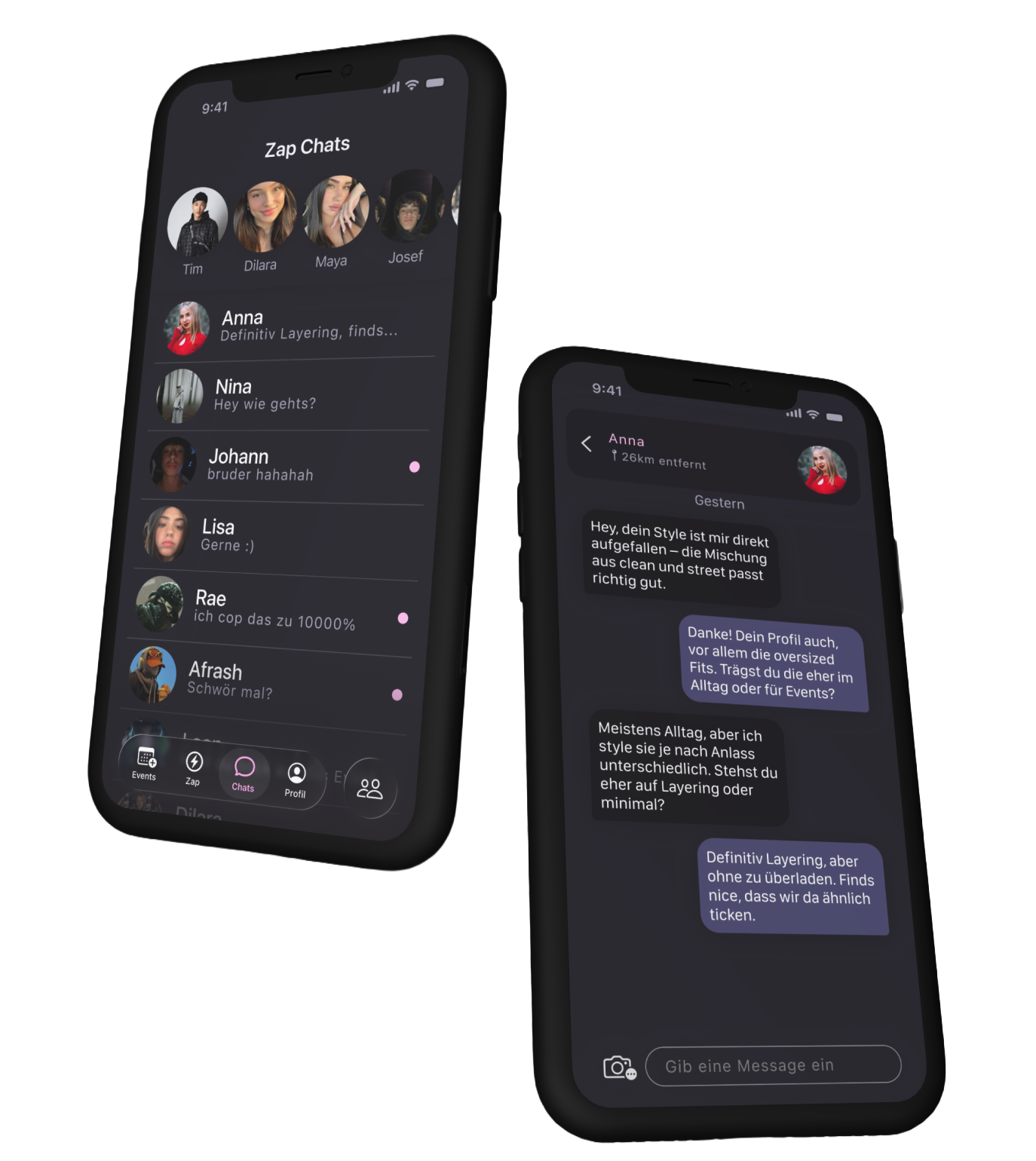
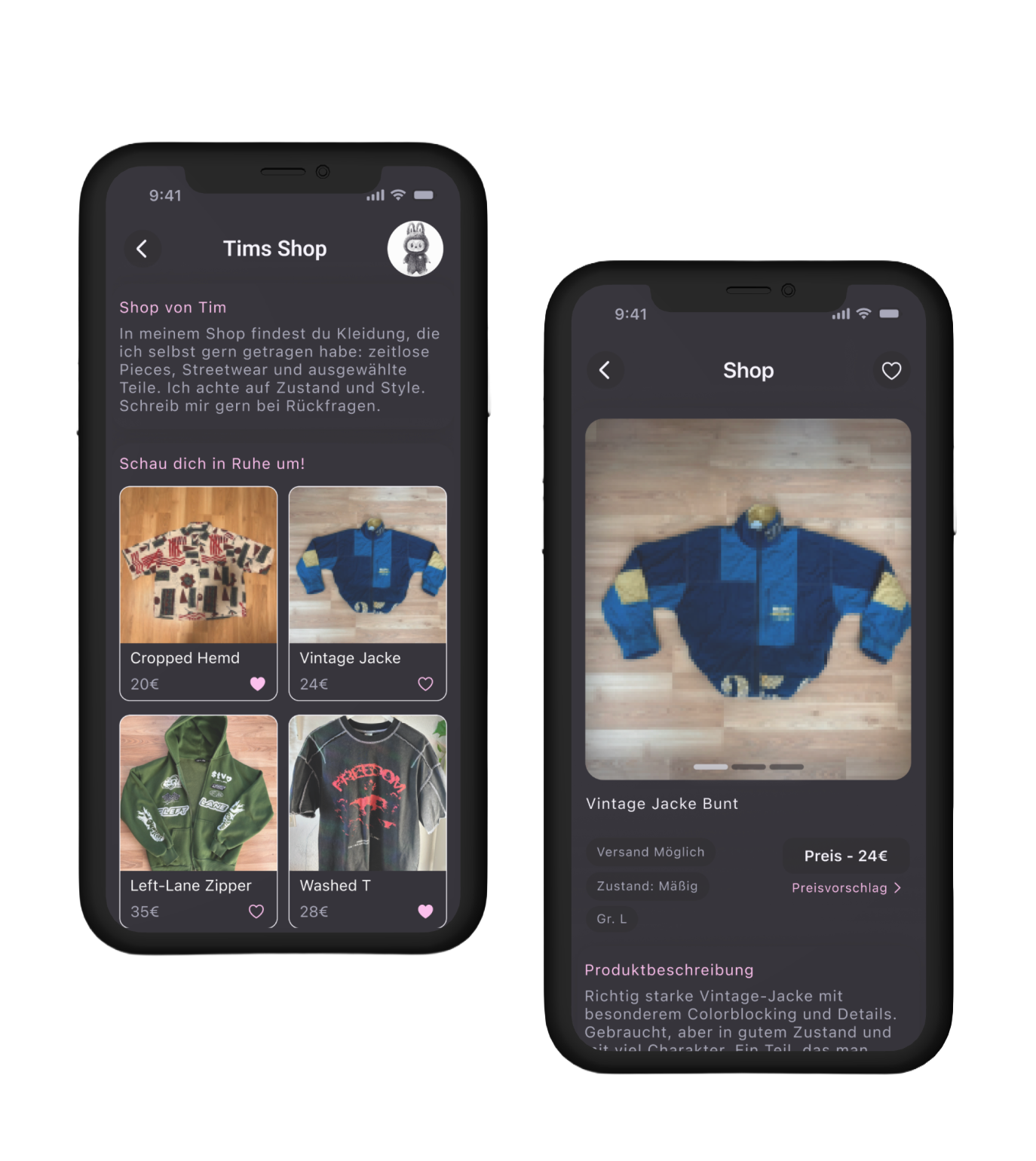
Duo project. Working with my partner meant every decision got challenged — and that's a good thing. You can't get away with "it just looks right" when someone else is sitting next to you asking why. The result is cleaner than anything I would have built alone.
HotDawgs is a 3D hot dog stand simulator built in Unity. You take orders, prep the food and serve customers before they lose patience — or before you give them the wrong thing. Simple premise, surprisingly stressful. The kind of game that's easy to pick up but hard to stay cool in when three customers show up at once.
HotDawgs — in-game footage
Customers spawn at a fixed point and walk to your stand autonomously. When they arrive, you can take their order — a floating UI element above their head. You pick it up, build the hot dog and hand it over. Get it wrong or take too long and your rating goes down. Reach zero stars, game over.
There's a lot of room to grow here. A progression system for upgrading your stand, more complex orders, rush hour moments — the foundation is solid enough to build on.
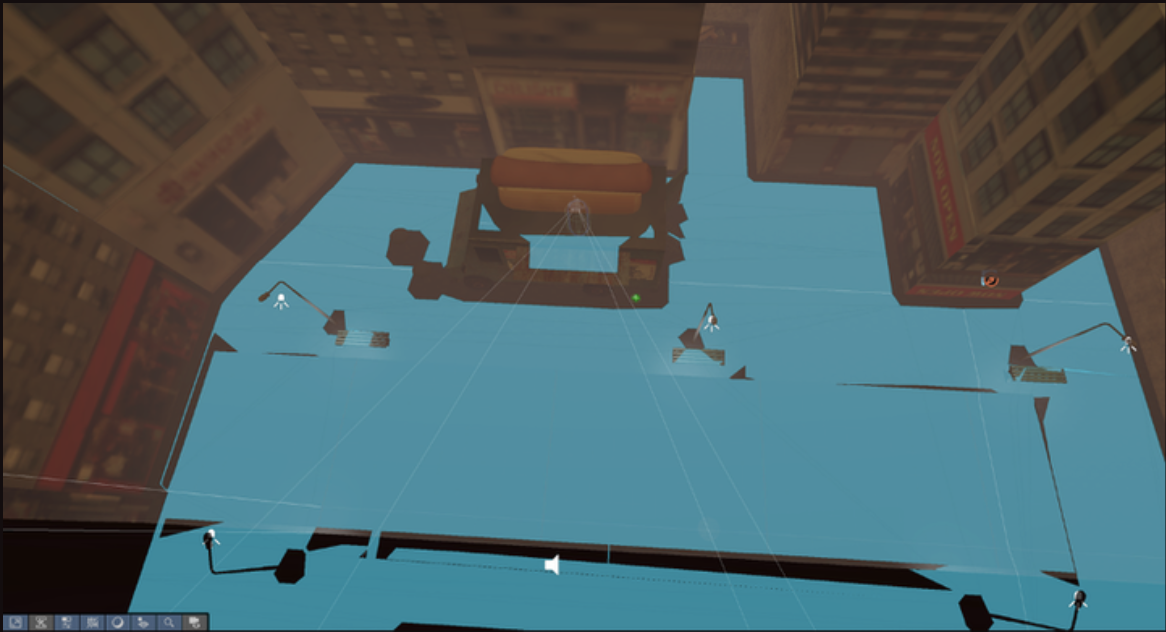
NavMesh visualization in Unity
Each customer is an agent with states: spawning → routing → waiting → leaving. NavMesh handles pathfinding to the stand. Once they arrive, a timer starts. If the player doesn't respond in time, they leave and you take a hit.
Orders are world-space UI elements that hover above the customer's head and rotate to always face the camera. Makes it readable from any angle without cluttering the screen.
Built almost entirely in Unity — 3D models in collaboration with my partner. The low-poly, PS1-inspired style was a deliberate choice to focus on gameplay and atmosphere without getting bogged down in details. Also we just like that aesthetic.
Duo project. I handled environment design and programming — mainly the customer logic and order system. Working with someone else made me familiar with using version control and collaborative development practices. For this we used GitHub.
→ Content coming soon
Imagine a really great project!
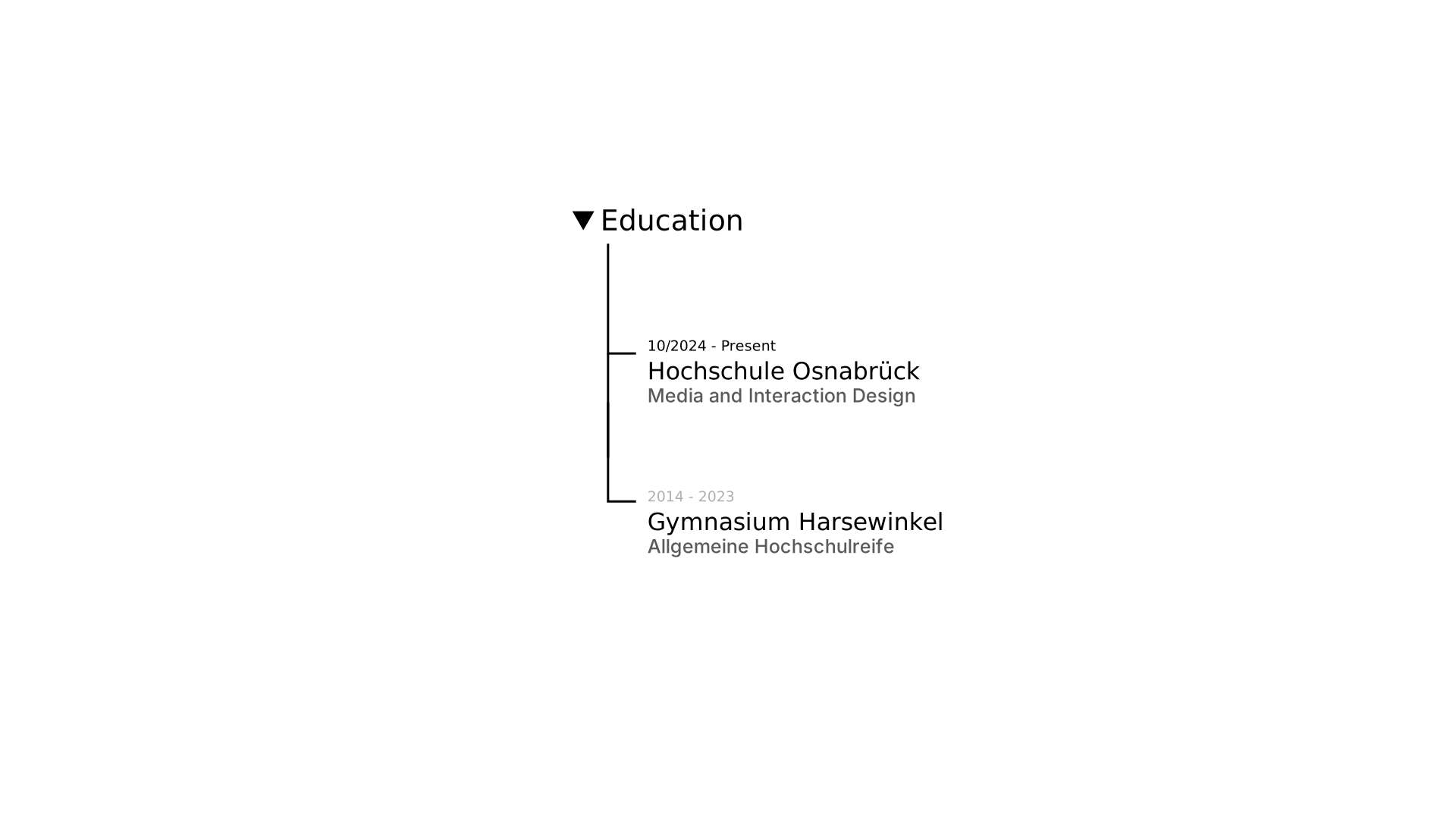
I'm a Media and Interaction Design student based in Osnabrück, currently enrolled in my fourth semester. I love bringing my ideas to life and presenting them in creative ways.
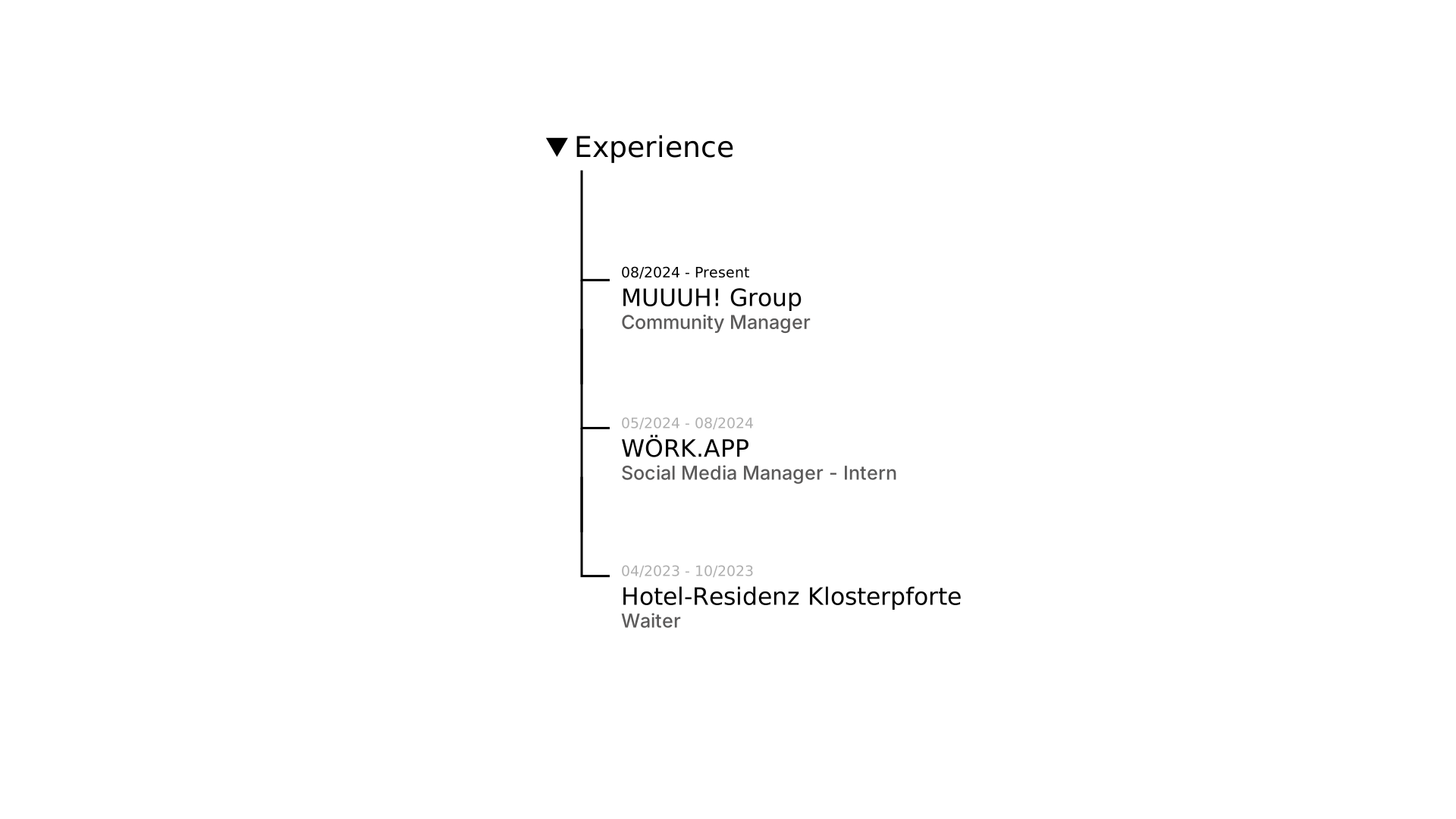
Besides my studies I'm working as a Community Manager overseeing
social media accounts of brands such as Condor, OBI and DGB.
My main goal is to keep learning.